Cash Flow
13-Week Cash Flow Forecasts for Grenada
Most SME owners know their bank balance. Fewer know what that balance will look like in six weeks. That gap between where you are and where you are heading is where cash crises are born.
A 13-week rolling cash flow forecast closes that gap. It is not a complicated tool. It is a weekly view of cash coming in and cash going out, extended three months forward and updated every week. Once it is running, it becomes one of the most useful things you look at in your business.
Why 13 weeks?
Three months is long enough to see problems before they arrive and short enough that your estimates are grounded in real information you already have: known invoices, confirmed orders, scheduled payments, upcoming wages.
Annual budgets are useful for planning but too far out for cash management. A weekly view of the next 13 weeks sits in the right zone: operational enough to act on, long enough to be genuinely useful.
What goes into it
The structure is straightforward. Each week has a column. Each row is a category of cash movement.
Cash inflows:
- Collections from existing debtors (who owes you money now and when are they likely to pay)
- Expected payments from upcoming invoices
- Any other confirmed receipts: loan drawdowns, asset sales, grants
Cash outflows:
- Wages and salaries (usually your most predictable line)
- Supplier payments and cost of goods
- Rent, utilities, and fixed overheads
- VAT and tax payment due dates. In Grenada, VAT is due monthly to the Inland Revenue Division at the 15% rate, so this line lands every month rather than quarterly.
- Loan repayments
- Any known one-off payments: equipment, professional fees, insurance renewals
The closing balance for each week rolls forward as the opening balance for the next. You can see at a glance which weeks look tight.
The most important part: your debtor assumptions
The weakest link in most cash flow forecasts is the assumption about when customers will actually pay. Putting your invoice terms in the model (say, 30 days) gives you an optimistic view. Putting your actual historical payment behaviour in the model gives you a realistic one.
Pull your debtor aging report. If a client owes you EC$40,000 and consistently pays at 60 days, model 60 days, not the 30 days printed on the invoice. If you have a batch of invoices out to slower payers, that needs to be reflected.
Take a wholesale or import-distribution business in Grenada as an example. It carries stock, buys on supplier terms, and sells on to retailers who rarely pay on the nail. The forecast only works if the timing of those retailer collections mirrors what actually happens rather than what the terms promise.
Overestimating collections is how a cash flow forecast creates false confidence. The point of the tool is to surface uncomfortable truths early enough to do something about them.
 A 13-week view keeps a Grenadian SME ahead of every wage run and supplier payment.
Keeping it current
A forecast that is not updated is just a document. The discipline is the weekly update: add the actual cash movements for the week just ended, roll the model forward by one week, and review the new 13-week picture.
This weekly discipline does two things. It keeps the numbers accurate. And it forces a regular cash conversation that many business owners otherwise avoid until there is a problem.
What to look for
Once you have the forecast running, a few things are worth watching:
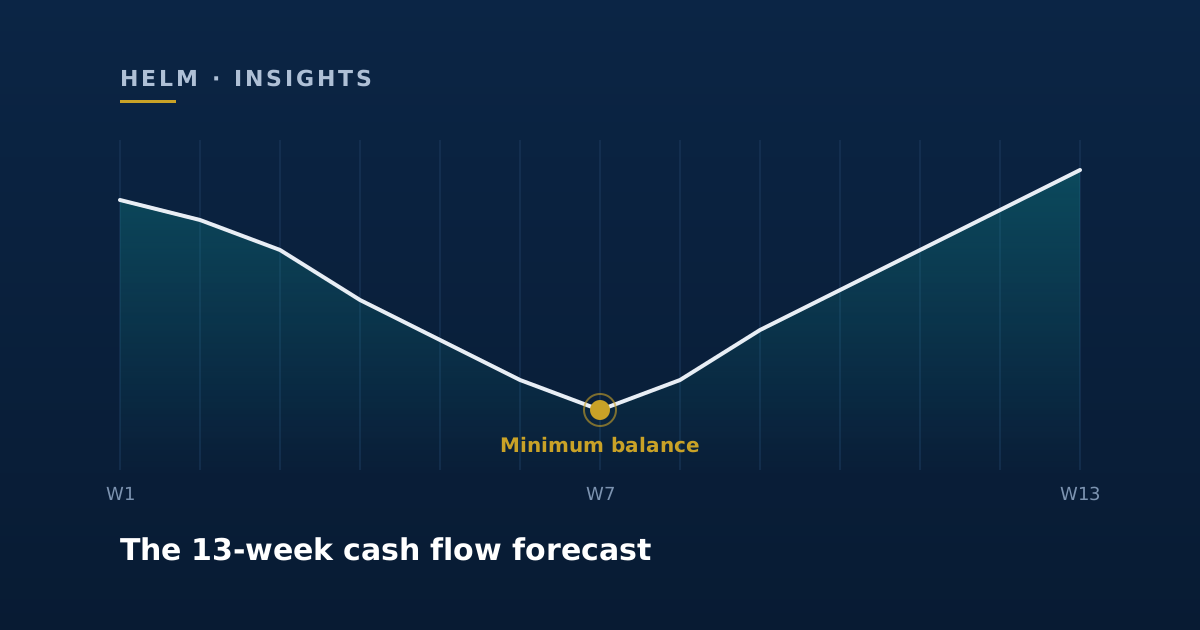
Minimum balance. Note the lowest projected closing balance across the 13 weeks. Is that comfortable? Is there a buffer for something unexpected?
Pinch points. Are there specific weeks where outflows cluster? VAT quarters, wage dates, and seasonal slow patches all create predictable tight spots. Seeing them in advance means you can smooth them.
The trend. Is your cash balance growing, shrinking, or volatile week to week? The direction matters as much as any single figure.
When it tells you something you do not want to hear
Sometimes the forecast will show a negative balance in week seven. That is uncomfortable. It is also the entire point.
You now have seven weeks to do something: chase debtors more aggressively, delay a discretionary payment, speak to your bank about a facility, accelerate a collection. All of those conversations are easier to have in week one than in week seven.
A cash flow forecast does not prevent cash problems. It converts surprises into scheduled problems, and scheduled problems are manageable.
Getting started
If you do not have a forecast at all, start simple. A spreadsheet with your known inflows and outflows for the next 13 weeks is enough to begin. It does not need to be perfect on day one. It needs to be honest and it needs to be maintained.
If you already have one but you are not fully confident in the assumptions or the structure, it is worth having someone review it with you. A forecast built on weak assumptions can be more dangerous than no forecast at all, because it tells you things are fine when they are not.
If you want to build a proper 13-week cash flow model or review the one you have, whether you operate in Grenada, elsewhere in the OECS, or Trinidad and Tobago, that is a good starting point for a complimentary financial health review. Request yours here.
Frequently asked questions
- Why 13 weeks specifically?
- Three months is long enough to see problems before they arrive and short enough that your estimates stay grounded in information you already have, such as known invoices, confirmed orders, scheduled payments, and upcoming wages.
- What is the weakest part of most cash flow forecasts?
- The assumption about when customers will actually pay. Using your invoice terms gives an optimistic view; using your actual historical payment behaviour from the debtor aging report gives a realistic one.
- How often should the forecast be updated?
- Weekly. Add the actual cash movements for the week just ended, roll the model forward by one week, and review the new 13-week picture.
Put this to work on your own numbers
Get a direct conversation about your numbers with a qualified Financial Controller. No obligation.
Request a complimentary review